
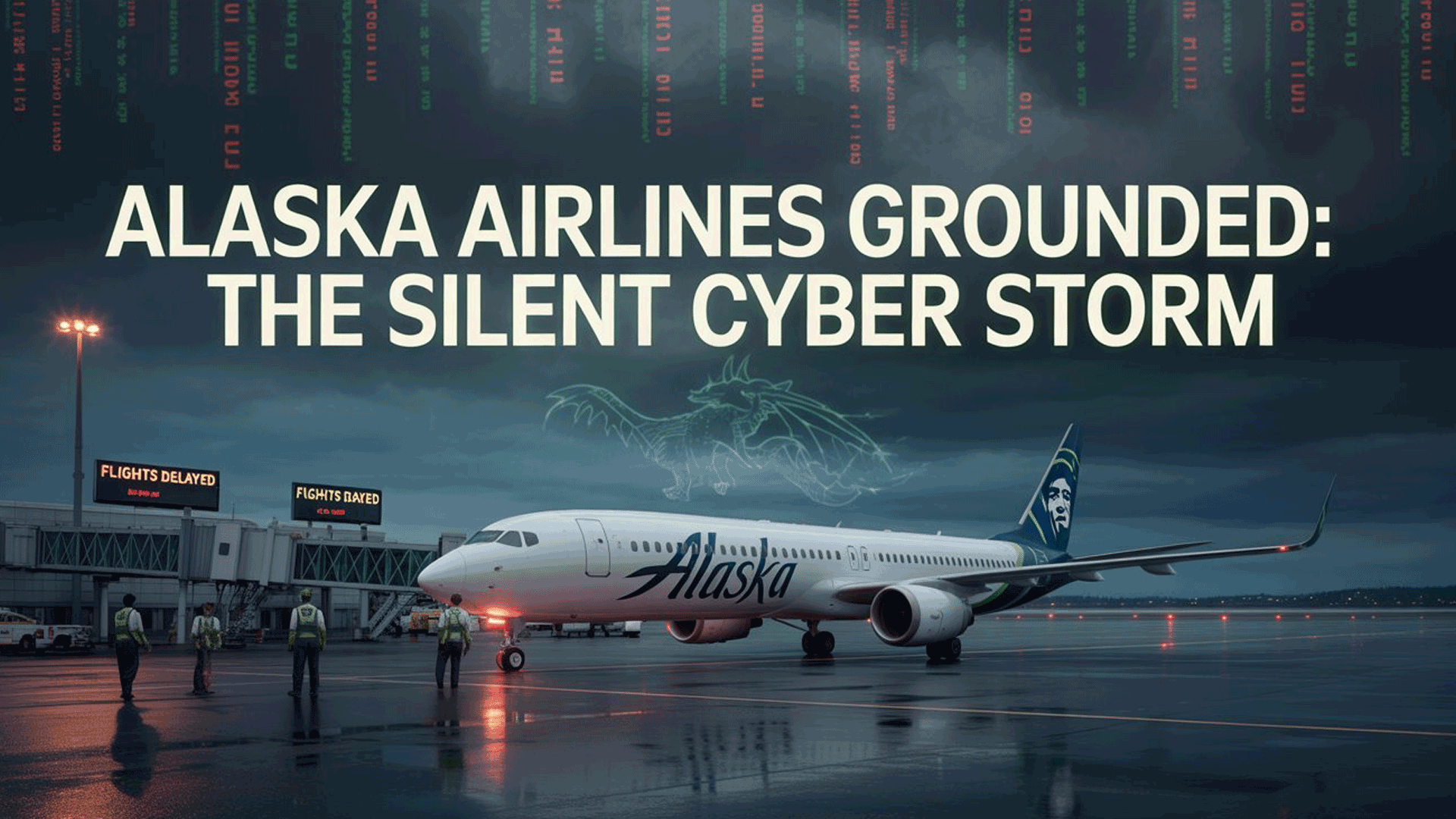
Late Sunday night, travelers across the U.S. were met with a frustrating surprise — Alaska Airlines grounded its entire fleet. For anyone stuck in terminals, staring at delay notifications, it felt like another tech hiccup. But behind the scenes, something much more serious may have been at play.
Around 8 p.m. Pacific Time on July 21, 2025, Alaska Airlines suddenly halted all mainline operations due to what they called a “technology issue.” Flights resumed a few hours later, just before 11 p.m., but the ripple effect carried into Monday morning — one of the busiest travel times of the week.
For frequent fliers, it was inconvenient. For the cybersecurity world? Alarming.
Just a few weeks ago, the FBI warned that U.S. airlines are facing active cyber threats. With this latest outage, many are wondering: was this simply a technical failure… or a warning shot from a much bigger threat?
Was This Just Another IT Glitch? Probably Not.
Airlines have issues from time to time. Software updates go wrong, systems crash — it happens. But this one was different.
It wasn’t just Alaska. Horizon Air, their regional partner, was also affected. That points to a shared infrastructure issue. And the timing? Just weeks after the FBI’s cyber threat alert. It’s no wonder experts are nervous.
When operations for a major airline grind to a halt across the board — without warning — people start asking the right questions.
The Bigger Picture: FBI’s Cyber Alert in June
On June 27, 2025, the FBI didn’t mince words. They issued a stark warning: America’s airlines are being targeted by cybercriminals — and not just any criminals, but likely state-sponsored actors looking to disrupt our infrastructure.
Sound scary? It should. Aviation is one of the most connected and tech-heavy industries in the world. And yet, it’s one of the least protected when it comes to cybersecurity.
That’s what makes this Alaska Airlines incident more than just a delay. It could be a red flag — one we can’t afford to ignore.
Alaska Airlines: A Pattern of Tech Trouble
Unfortunately, this isn’t Alaska’s first run-in with tech-related disruptions. Let’s take a quick look:
- April 2025 – A failure in the airline’s weight and balance software grounded its fleet for hours.
- August 2024 – A cyberattack hit Seattle-Tacoma International Airport (Alaska’s main hub), causing delays, lost baggage, and widespread communication outages.
- January 2024 – A door plug detached mid-flight, prompting serious concerns about inspection protocols and safety oversight.
Each event had different causes, but all point to one uncomfortable truth: we are relying on systems that may not be strong enough to handle today’s threats.
Enter Salt Typhoon: A Name That Keeps Popping Up
If you haven’t heard of Salt Typhoon yet, you will.
They’re a Chinese state-backed hacking group known for going after sensitive targets — telecom companies, military networks, infrastructure operators, and now, possibly airlines. They don’t make noise. They move quietly, get inside systems, and stay hidden for months.
In 2024, Salt Typhoon managed to infiltrate nine major U.S. telecom providers. Even more concerning, they accessed a U.S. Army National Guard unit and remained undetected for nearly a year.
That’s the scary part — they don’t need to take things down immediately. They just need to get in. And if they’re already inside aviation systems, the next disruption might be far worse than a few grounded planes.
Why Airlines Are the Perfect (and Easy) Targets
✈️ People’s Lives Are on the Line
When you fly, you trust the systems behind the scenes — flight plans, maintenance records, navigation networks, and more. A small hiccup could mean a delayed flight. A cyberattack? That could mean much worse.
💸 The Economy Depends on Smooth Flights
Airlines move more than 2.5 million passengers every single day — not to mention time-sensitive cargo. When flights stop, the effects cascade: missed connections, halted manufacturing, late deliveries. It’s like pulling a plug out of the country’s power grid.
🧱 Security Gaps Are Worryingly Common
Unlike banks or defense contractors, airlines don’t follow a standardized cybersecurity protocol. Many still rely on legacy software, work with dozens of vendors, and operate with small IT teams. In other words: plenty of cracks to slip through.
The Government Can’t Do It All Anymore
In the past, federal agencies like the Cybersecurity and Infrastructure Security Agency (CISA) could offer support. But recent budget cuts have trimmed that safety net.
Now, more than ever, the private sector needs to step up. Airlines, airports, tech providers — they all need to act like they’re defending the country’s digital borders. Because in a way, they are.
So, What Needs to Happen?
✅ Adopt Industry-Wide Cyber Standards
The Department of Defense uses something called the Cybersecurity Maturity Model Certification (CMMC) to ensure that defense contractors take cybersecurity seriously. The aviation industry should follow a similar path.
🔒 Secure Every Link in the Chain
It’s not just about the airline’s internal systems. Every third-party vendor — from food suppliers to maintenance crews — needs to follow strict cybersecurity rules. One weak link can compromise the whole chain.
🧠 Invest in the Right People and Tools
Cybersecurity isn’t just about software — it’s about smart people making smart decisions. Airlines need to hire skilled professionals, run regular threat assessments, and be proactive instead of reactive.
🎯 Run Simulated Attacks
You wouldn’t skip fire drills, right? Airlines should run red team exercises — simulated cyberattacks — to see where they’re most vulnerable.
Why This Needs Urgent Attention
This Alaska Airlines grounding isn’t just another story in the news cycle. It’s a flashing warning sign. Our skies are becoming the next front in the battle for cybersecurity.
Airlines aren’t just transportation companies anymore. They are critical infrastructure — and should be treated like it. That means stricter rules, better protection, and serious investment.
We’ve hardened cockpits. We’ve added more TSA checkpoints. Now it’s time to harden our digital defenses, too.
Final Thoughts: A Wake-Up Call at 30,000 Feet
We often take flying for granted. Buy a ticket, hop on board, and you’re halfway across the country in a few hours. But behind that simplicity is a deeply complex web of technology — and that web is under attack.
Whether or not Salt Typhoon caused the Alaska Airlines grounding, the signs are clear: the threats are growing, and we’re not ready.
Cybersecurity in aviation can’t be optional anymore. We’ve had our warning. Let’s not wait for a tragedy to take this seriously.
FAQs
❓Was this a confirmed cyberattack?
No, not officially. But the nature of the outage has cybersecurity experts concerned, especially given the FBI’s recent warnings.
❓Who is Salt Typhoon?
Salt Typhoon is a Chinese state-sponsored hacking group known for targeting telecoms, infrastructure, and military systems across the U.S.
❓Why are airlines so vulnerable?
Many airlines still use old software, rely on third-party systems, and don’t have standardized cybersecurity protections. That makes them easy targets.
❓What can airlines do now?
They need to adopt stronger cybersecurity frameworks, invest in expert staff, run simulations, and secure every part of their digital supply chain.
❓What does this mean for travelers?
Stay informed, stay flexible, and consider travel insurance that covers tech-related disruptions. Also, pressure airlines and lawmakers to prioritize cybersecurity — it affects us all.
